
You see an ad for web hosting lifetime subscription. Pay once. Never get a bill again. It sounds perfect, right?
But is it too good to be true? Many website owners ask: is lifetime hosting real or scam?
The truth is complicated. A lifetime hosting real or scam verdict depends on the company.
Here is the reality. You pay a large upfront fee. In return, the company promises to host your site forever.
However, there are usually hidden catches. Often, you still have to pay for your domain name every year. Some plans also limit your traffic or storage space. If your site grows, you might hit a wall.
Lifetime hosting real or a scam? It is not always a scam. But it is a risk. Some companies go out of business. Others offer slow servers.
For a hobby site, it might be okay. For a business, it is safer to pay monthly. You get better speed and support. Always read the fine print before you buy.
So, is lifetime hosting real or a scam? The answer isn’t always black and white. In this article, we’ll break it down. You’ll learn how web hosting lifetime subscription plans really work. We’ll show you the red flags to watch for. And by the end, you’ll know if lifetime hosting real or a scam applies to the deal you’re considering.
What Is Lifetime Hosting?
Lifetime hosting sounds simple. But the term can be tricky. Knowing what providers really mean is your first step. It helps you avoid disappointment.
What Companies Promise
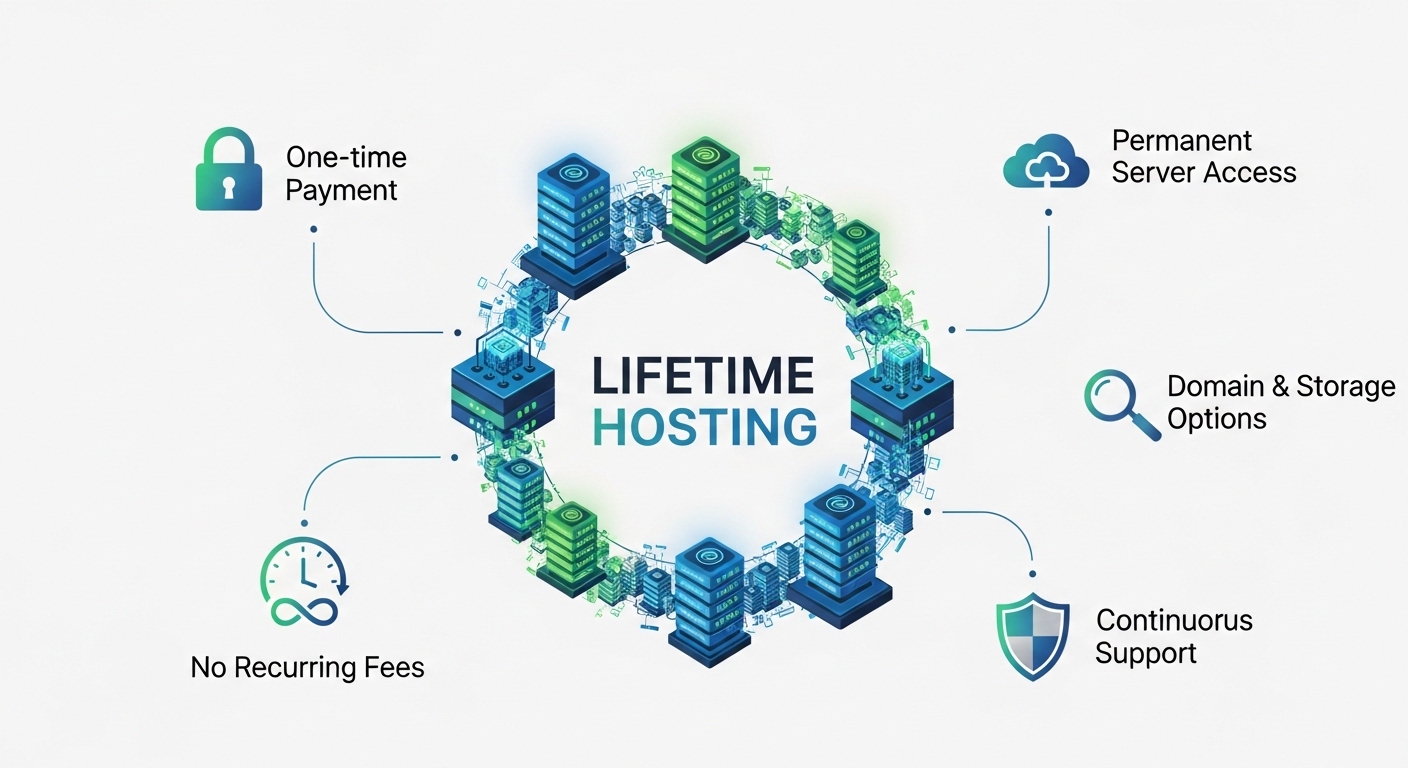
Marketing says things like “one-time payment” and “no recurring fees.” They promise to host your site for life. It sounds like a dream. But the truth varies by company. The fine print often tells a different story.
What “Lifetime” Actually Means
The word “lifetime” can mean different things:
-
Lifetime of the product. Your plan lasts until the company ends it.
-
Lifetime of the customer. Services continue while you live. This is rare.
-
Lifetime of the website. Coverage is for one site only.
-
Limited lifetime. Some offers are just 5 to 10 year plans.
-
Lifetime of the company. If the business closes, your hosting ends.
What the Fine Print Says
Contracts reveal the truth. You might see:
-
“Lifetime valid for 5 years”
-
“Applies while this product line exists”
-
“Free for life” meaning only the first year
Always read the terms. Lifetime hosting reviews often warn about these catches. Lifetime hosting cost can seem cheap upfront. But lifetime hosting pricing hides limits. Know what you are paying for.
How Lifetime Hosting Companies Work
Pros of Lifetime Hosting
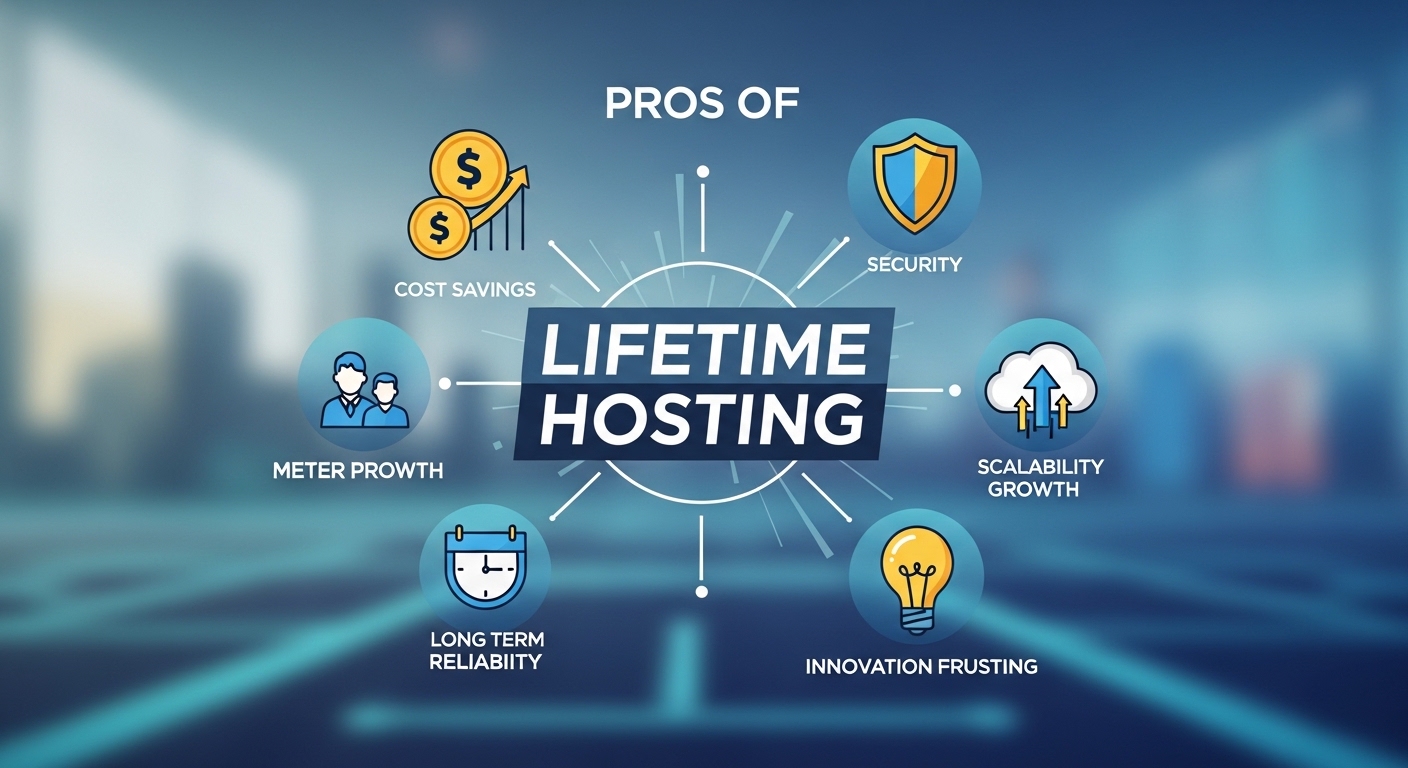
Lifetime hosting can be risky. But it also has real benefits. For the right person, these deals make sense.
One-time payment appeal.
The biggest plus is simple. You pay once, and the bills stop. For budget-conscious users, this feels freeing. You have one less expense to track. You avoid monthly auto-payments. It gives you peace of mind. Your hosting is “paid off.”
Lower long-term cost.
If the company stays in business for five years or more, you save money. A one-time payment web hosting plan might cost $300. A $5 monthly plan costs the same after five years. After ten years, you have saved $300. For long projects, the math works.
Great for small projects.
Lifetime unlimited hosting works well for:
-
Personal blogs or hobby sites.
-
Portfolios you keep for years.
-
Developer testing areas.
-
Projects where downtime is not a disaster.
For these uses, the risk is small. You are not betting your business on it. You are just saving money on a side project.
The key is to match the risk to your site’s value. Business sites should avoid this deal. But low-stakes projects can win.
Red Flags & Risks

Lifetime hosting offers come with warning signs. Some are scams. Others are just bad deals. Here is what to watch for.
Unrealistic promises.
No host is truly unlimited. Servers have limits. A lifetime unlimited hosting plan cannot give infinite resources for one payment. It is mathematically impossible. If it sounds too good to be true, it is.
Vague terms.
Read the fine print. Some deals hide fees. Others change rules without notice. Good hosts explain exactly what you buy. No guessing.
No refund policy.
Quality hosts give 30 to 60 days to test. Avoid “no refunds” or store credit only. You need time to try before you commit.
Poor support.
Test them first. Send a question. If replies are slow or useless, imagine how bad it gets later. Some hosts give zero help after they take your money.
New companies.
Some brands vanish after a year. They reappear under new names. Check when their domain started. A brand new domain with big promises is suspicious.
Common scam signals.
Watch for:
- No company history
- Anonymous founders
- Fake reviews
- Pressure tactics like “limited spots”
- No physical address
- Crypto-only payments
- Unprofessional websites
Real vs. Scam — Examples
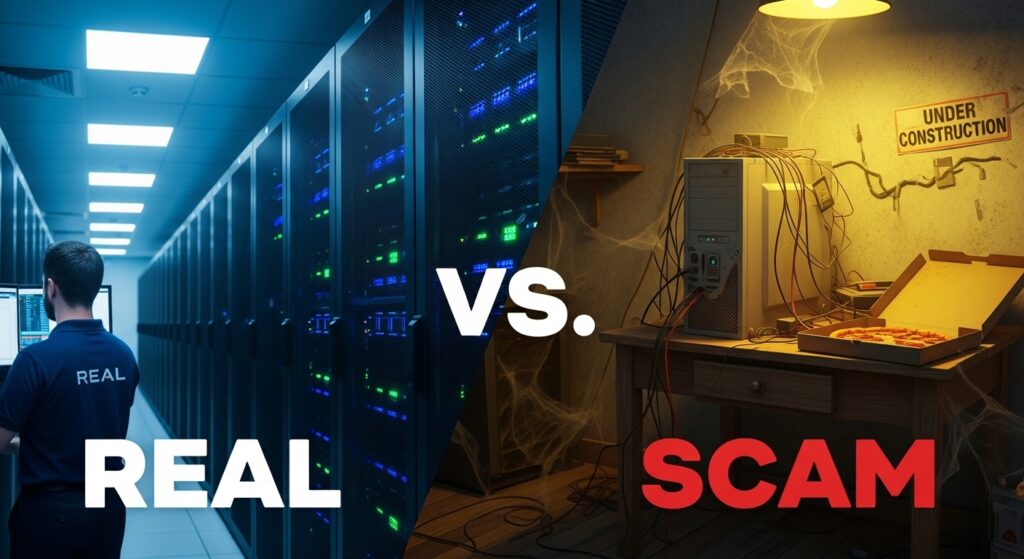
Theory helps. But real examples show the difference. Let us look at both sides.
Legitimate lifetime hosting offers.
True lifetime hosting is rare. But some good options exist. PawnHoster offers a lifetime unlimited hosting plan for $49.99. It comes with 10GB NVMe storage, free SSL, and email hosting. Voxfor also has a web hosting lifetime deal. It includes security tools and daily backups. These offers have limits. Resources are capped. Even legit deals need scrutiny. Always research before you buy.
Scam case studies.
Some hosts take money and vanish. Robert W. Lederhilger III ran FreeBird Host and Total Host Pro. He mailed fake bills to small businesses. He made nearly $3 million from the fraud. LolekHosted was another scam. It served hackers and malware groups. Polish police arrested its operators in 2023. NodeKi went bust in 2014. Its lifetime plans failed. Customers got no refunds.
How to research and verify a hosting provider.
-
WHOIS lookup. Use lookup.icann.org to check domain dates. A brand new domain promising “10 years in business” is lying.
-
Trustpilot reviews. Read independent reviews. Watch for clusters of 5-star posts made at the same time.
-
Domain age. Verify registration dates. A domain from three months ago claiming a decade of service is fraud.
-
Hosting boards. Check WebHostingTalk and LowEndTalk. Search the company name with “scam” or “review.”
A one-time payment web hosting plan can work. But only with careful checks. If you cannot verify the company’s history or find real customers, walk away.
How to Evaluate a Lifetime Hosting Offer

Thinking about a lifetime unlimited hosting deal? Use this checklist. It helps you spot real offers and avoid scams.
Questions to ask before buying.
-
What does “lifetime” cover? Your life? The company’s life? Get it in writing. If it means “as long as the company exists,” that could end next year.
-
What is included? Check storage limits and bandwidth caps. Does it include email, backups, and SSL? Many web hosting lifetime deal plans leave out basic features.
-
Are there renewal fees? Some one-time payment web hosting plans still charge for domains or support. Know all costs upfront.
-
What is the refund policy? Good hosts offer 30 to 60 days. No refunds is a red flag.
Checklist for vetting offers:
| Check | What to Look For |
| Registered business? | Verify company registration, physical address, and tax ID |
| Active support team? | Test support before buying—response time and helpfulness |
| Clear SLA? | Service Level Agreement with uptime guarantees and compensation terms |
| Company history? | How long have they operated? Check domain age via WHOIS |
| Independent reviews? | Read Trustpilot, Reddit, and hosting forum discussions |
| Transparent terms? | Clear, straightforward language—not hidden in fine print |
Alternatives to Lifetime Hosting

Lifetime hosting feels risky. For most people, it should. Here are safer choices. They offer great value without the uncertainty.
Traditional hosting plans.
Standard hosting is the safest bet. Shared hosting costs $3 to $10 monthly. VPS runs $20 to $50. Cloud hosting lets you pay as you go. You pay a bit more. But you get reliability and support. Big names like SiteGround, Hostinger, and Bluehost have decades of history.
Yearly plans with discounts.
Annual plans balance savings and safety. Most quality hosts offer big discounts on yearly payments. You often save 50 to 70 percent. A $120 yearly plan works out to $10 monthly. Compare that to a $300 web hosting lifetime deal from an unknown brand. The yearly plan often wins on value.
Reseller or managed hosting.
Need multiple sites? Reseller hosting gives bulk discounts. Managed WordPress hosting offers speed and expert help. These cost more than basic plans. But they deliver better performance and peace of mind.
The math matters.
A good host at $10 monthly costs $120 per year. Over five years, that is $600. That matches many lifetime unlimited hosting offers. But you get proven reliability. You get support when things break. And there is no risk of sudden shutdown.
For most sites, predictable yearly payments beat gambling on one-time payment web hosting every time.
Conclusion
FAQs
1. Is lifetime hosting cheaper than regular hosting?
Mathematically, yes. A one-time payment web hosting plan at $300 equals five years of $5 monthly hosting. You save money after five years. But most lifetime hosts do not last that long. For important sites, the risk is too high.
2. What happens if the company shuts down?
Your site goes offline. You lose files, databases, and emails. There is no refund. Always keep backups if you take this risk.
3. Are lifetime domains the same as lifetime hosting?
No. Domains renew every year. True lifetime domains do not exist. Some hosts offer “free domain for life.” That means they pay renewal fees while you host with them. If they shut down, you lose the domain.
4. Can I upgrade my lifetime plan later?
Some hosts allow upgrades. Others do not. Ask before buying. Many lock you into the original resources forever.
5. Is customer support included forever?
Not always. Some lifetime plans limit support to the first year. After that, you are on your own. Read the fine print.
6. Can I host multiple websites on one lifetime plan?
It depends on the plan. Some allow one site. Others offer multi-site options. Check the terms carefully.
7. Do lifetime hosting plans include SSL certificates?
Some do. Some do not. Many require you to pay for SSL separately. Always confirm what is included.
8. Can I get a refund if I change my mind?
Quality hosts offer 30 to 60 day refunds. Many lifetime deals do not. If refunds are not offered, consider it a warning sign.
9. Are there hidden fees?
Sometimes. Watch for setup fees, domain renewal charges, or backup costs. Ask about all potential costs upfront.
10. How long do most lifetime hosting companies last?
Most fail within 2 to 5 years. Many disappear within 18 months. That is why research matters.
11. Can I migrate my site if the host fails?
Only if you have backups. If you keep off-site backups, you can move to another host. Without backups, your data is gone.
12. Is lifetime unlimited hosting truly unlimited?
No. Every host has limits. “Unlimited” usually means fair usage limits. Read the terms to understand the real caps.
13. Are there any reputable lifetime hosting providers?
A few exist. PawnHoster and Voxfor are examples. But even they require scrutiny. No provider is risk-free.
14. Should I use lifetime hosting for a business site?
No. Business sites need reliability. The risk of downtime or shutdown is too high. Stick with established monthly hosts.
15. What is the safest alternative to lifetime hosting?
Yearly plans from trusted brands like SiteGround or Hostinger. You save money without gambling on an unknown company.
16. How do I verify if a web hosting lifetime deal is legit?
Check domain age with WHOIS. Read Trustpilot reviews. Search forums like WebHostingTalk. Look for real customer experiences.
17. Can I sell my lifetime hosting plan?
Most plans are non-transferable. Selling is usually not allowed. Check the terms before assuming you can.
18. What does “lifetime” actually mean?
It varies. Some mean your lifetime. Some mean the company’s lifetime. Others mean the product’s lifespan. Get a clear definition in writing.

Leave a Comment