
Hostinger Hosting
VerifiedHostinger is a reliable web hosting service. It offers trusted performance and great support for websites. You can pick from shared, VPS, or cloud hosting plans. This helps you find...
View Full Review →
Explore expert reviews and real user ratings of top web hosting companies. Easily compare plans and features to choose the right hosting for your website.
Hostinger is a reliable web hosting service. It offers trusted performance and great support for websites. You can pick from shared, VPS, or cloud hosting plans. This helps you find...
View Full Review →


Up to 75% off hosting + AI website builder
Hostinger is a reliable web hosting service. It offers trusted performance and great support for websites. You can...

Smooth and intuitive user experience
Every hosting provider claims fast performance, reliable uptime, and excellent support—but real-world results matter. I tested ChemiCloud’s speed,...

Save up to 87% now.
I tested Hosting.com shared and VPS plans. I wanted to see real performance. Not just numbers. From setup...

Hosting is even better with HostGator.
I tested HostGator speed, uptime, and support. I reviewed HostGator pricing and plans. Is HostGator good? Here is...
Bluehost Hosting Review Auguest 2026
| Plan | Space | OS | RAM | Price | Rating | |
|---|---|---|---|---|---|---|
|
Bluehost Shared Hosting Plans
|
||||||
| Basic | 10 GB |
|
$3.79 | View Plan | ||
HostGator Hosting Review November 2025
| Plan | Space | OS | RAM | Price | Rating | |
|---|---|---|---|---|---|---|
|
HostGator Shared Hosting Plans
|
||||||
| Hatchling | 10 GB |
|
$3.75 | View Plan | ||
| Baby | 20 GB |
|
$4.50 | View Plan | ||
| Baby Plan WP | 20 GB |
|
$4.50 | View Plan | ||
| Personal (Windows) | Unlimited |
|
$4.76 | View Plan | ||
| Business Plan WP | 50 GB |
|
$6.25 | View Plan | ||
| Business Plan | 50 GB |
|
$6.25 | View Plan | ||
| eCommerce Plan: ONLINE STORE | 40 GB |
|
$9.95 | View Plan | ||
| Pro Plan WP | 100 GB |
|
$13.95 | View Plan | ||
| Enterprise (Windows) | Unlimited |
|
$14.36 | View Plan | ||
|
HostGator Cloud Hosting Plans
|
||||||
| Hatchling Cloud | Unlimited |
|
2 GB | $4.95 | View Plan | |
| Baby Cloud | Unlimited |
|
4 GB | $6.57 | View Plan | |
| Business Cloud | Unlimited |
|
6 GB | $9.95 | View Plan | |
|
HostGator Resellers Plans
|
||||||
| Snappy 2000 | 120 GB |
|
$36.99 | View Plan | ||
| Snappy 4000 | 165 GB |
|
$53.99 | View Plan | ||
| Snappy 8000 | 240 GB |
|
$95.99 | View Plan | ||
|
HostGator VPS Plans
|
||||||
| Hatchling Plan (For Developers) | 10 GB |
|
$3.75 | View Plan | ||
| Snappy 2000 | 120 GB |
|
2 GB | $36.99 | View Plan | |
| Snappy 4000 | 165 GB |
|
4 GB | $53.99 | View Plan | |
| Snappy 8000 | 240 GB |
|
8 GB | $95.99 | View Plan | |
|
HostGator Dedicated Server Plans
|
||||||
| Value Server | 1 TB |
|
8 GB | $91.98 | View Plan | |
| Power Server | 512 GB |
|
16 GB | $121.89 | View Plan | |
| Enterprise Server | 1 TB |
|
30 GB | $141.99 | View Plan | |
Hosting.com Hosting Review August 2026

InterServer Hosting Review November 2025
| Plan | Space | OS | RAM | Price | Rating | |
|---|---|---|---|---|---|---|
|
InterServer Shared Hosting Plans
|
||||||
| STANDARD | Unlimited |
|
- | $2.50 | View Plan | |
| WORDPRESS | Unlimited |
|
- | $8.00 | View Plan | |
| WINDOWS ASP.NET | Unlimited |
|
- | $8.00 | View Plan | |
|
InterServer VPS Plans
|
||||||
| VPS1 - Linux | 15 GB |
|
1 GB | $3.00 | View Plan | |
| Storage Optimized VPS 1 | 1 TB |
|
2 GB | $3.00 | View Plan | |
| VPS1 - Windows | 40 GB |
|
2 GB | $5.00 | View Plan | |
| VPS2 - Linux | 30 GB |
|
2 GB | $6.00 | View Plan | |
| WordPress VPS 1 | 30 GB |
|
2 GB | $6.00 | View Plan | |
| Webuzo | 30 GB |
|
2 GB | $6.00 | View Plan | |
| VPS3 - Linux | 45 GB |
|
3 GB | $9.00 | View Plan | |
| Storage Optimized VPS 3 | 3 TB |
|
6 GB | $9.00 | View Plan | |
| VPS2 - Windows | 80 GB |
|
4 GB | $10.00 | View Plan | |
| WordPress VPS 2 | 60 GB |
|
4 GB | $12.00 | View Plan | |
| VPS4 - Linux | 60 GB |
|
4 GB | $12.00 | View Plan | |
| Storage Optimized VPS 5 | 5 TB |
|
10 GB | $15.00 | View Plan | |
| VPS3 - Windows | 120 GB |
|
6 GB | $15.00 | View Plan | |
| VPS5 - Linux | 75 GB |
|
5 GB | $15.00 | View Plan | |
| VPS6 - Linux | 90 GB |
|
6.05 GB | $18.00 | View Plan | |
| VPS4 - Windows | 160 GB |
|
8 GB | $20.00 | View Plan | |
| VPS7 - Linux | 105 GB |
|
7 GB | $21.00 | View Plan | |
| VPS8 - Linux | 120 GB |
|
8 GB | $24.00 | View Plan | |
| WordPress VPS 4 | 120 GB |
|
8 GB | $24.00 | View Plan | |
| VPS5- Windows | 200 GB |
|
10 GB | $25.00 | View Plan | |
| VPS9 - Linux | 135 GB |
|
9 GB | $27.00 | View Plan | |
| VPS10 - Linux | 150 GB |
|
1 GB | $30.00 | View Plan | |
| Storage Optimized VPS 10 | 10 TB |
|
20 GB | $30.00 | View Plan | |
| VPS6 - Windows | 240 GB |
|
12 GB | $30.00 | View Plan | |
| VPS11 - Linux | 165 GB |
|
11 GB | $33.00 | View Plan | |
| VPS7 - Windows | 280 GB |
|
14 GB | $35.00 | View Plan | |
| VPS12 - Linux | 180 GB |
|
12 GB | $36.00 | View Plan | |
| WordPress VPS 6 | 180 GB |
|
12 GB | $36.00 | View Plan | |
| VPS13 - Linux | 195 GB |
|
1.29 GB | $39.00 | View Plan | |
| VPS8 - Windows | 320 GB |
|
16 GB | $40.00 | View Plan | |
| VPS14 - Linux | 210 GB |
|
14 GB | $42.00 | View Plan | |
| VPS9 - Windows | 360 GB |
|
18 GB | $45.00 | View Plan | |
| VPS15 - Linux | 225 GB |
|
15 GB | $45.00 | View Plan | |
| VPS16 - Linux | 240 GB |
|
16 GB | $48.00 | View Plan | |
| Storage Optimized VPS 16 | 16 TB |
|
16 GB | $48.00 | View Plan | |
| WordPress VPS 8 | 240 GB |
|
16 GB | $48.00 | View Plan | |
| VPS10 - Windows | 400 GB |
|
20 GB | $50.00 | View Plan | |
| VPS11 - Windows | 440 GB |
|
22 GB | $55.00 | View Plan | |
| VPS12 - Windows | 480 GB |
|
24 GB | $60.00 | View Plan | |
| WordPress VPS 10 | 300 GB |
|
20 GB | $60.00 | View Plan | |
| VPS13 - Windows | 520 GB |
|
26 GB | $65.00 | View Plan | |
| VPS14 - Windows | 560 GB |
|
28 GB | $70.00 | View Plan | |
| VPS15 - Windows | 600 GB |
|
30 GB | $75.00 | View Plan | |
| WordPress VPS 13 | 390 GB |
|
26 GB | $78.00 | View Plan | |
| VPS16 - Windows | 640 GB |
|
32 GB | $80.00 | View Plan | |
| WordPress VPS 16 | 480 GB |
|
32 GB | $96.00 | View Plan | |
|
InterServer Dedicated Server Plans
|
||||||
| Xeon E3-1270v2 | 2.05 TB |
|
32 GB | $49.00 | View Plan | |
| Xeon E3-1240v5 | 21.5 TB |
|
64 GB | $64.00 | View Plan | |
| AMD RYZEN 5600X SALE | 2 TB |
|
64 GB | $74.00 | View Plan | |
| AMD EPYC 7402P | 4 TB |
|
256 GB | $114.00 | View Plan | |
| 2 x Xeon E5-2697v2 SALE | 500 GB |
|
64 GB | $120.00 | View Plan | |
| 2 X XEON E5-2680V4 8LFF | 2 TB |
|
128 GB | $170.00 | View Plan | |
| 2 x Xeon E5-2678v3 8SFF | 1 TB |
|
128 GB | $179.00 | View Plan | |
| 2 X XEON E5-2678V3 (STORAGE) | 20 TB |
|
128 GB | $799.00 | View Plan | |

ScalaHosting Hosting Review March 2026
Hostinger Hosting Review June 2026


Hosting Rated is a dedicated web hosting review and comparison platform built to help users choose reliable hosting services with confidence. Our goal is to simplify hosting decisions by providing honest insights, clear comparisons, and performance-focused evaluations. Instead of marketing hype, we focus on real value, usability, and long-term reliability so website owners can make smarter choices.

At Hosting Rated, our expert team brings together experienced researchers, web developers, hosting specialists, and digital marketers who understand the real needs of website owners. Every review and comparison is carefully analyzed by professionals with hands-on experience in website management, server performance testing, and online business growth.

At Hosting Rated, we follow a structured and transparent methodology to ensure every hosting review is fair, accurate, and useful. Our evaluation process combines real testing, technical analysis, and user-focused research to deliver reliable hosting ratings you can trust.
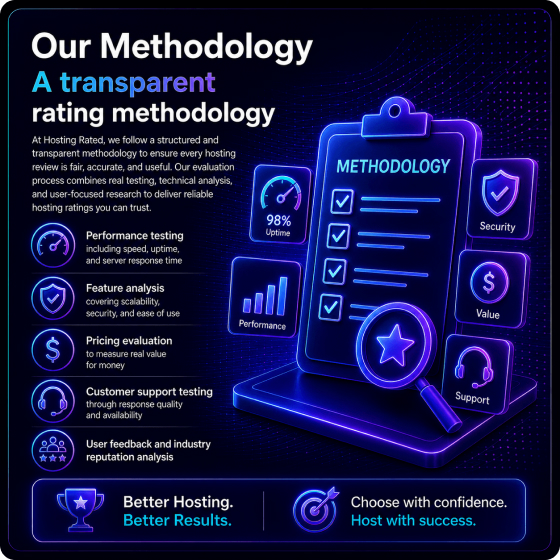
Hosting Rated is committed to providing honest, transparent, and research-based hosting reviews. We understand that choosing a hosting provider is an important decision, so our recommendations are built on real testing, industry experience, and unbiased evaluation rather than promotional claims.




Hosting Expert

Hosting Features Analyst

Uptime & Security Expert

Technical Hosting Reviewer
Let's face it: Most hosting sites are an absolute joke. They look cheap, feel shady, and more often than not — they're exactly as unreliable as they seem.
Enter Hosting Rated.
We're not here to play games. We're a team of real-world hosting veterans with a combined 7 years of hard-earned experience. We've built and managed everything from massive sites crushing millions of visitors a month to small, passion-fueled personal projects. And every single month, we invest thousands of dollars of our own money testing hosting services — so you don't have to gamble with yours.
Our mission is massive but simple: To deliver the most brutally honest, rock-solid, no-BS hosting advice on the entire internet.
We're talking in-depth reviews that tell it like it is. Step-by-step how-to guides. Breaking news and insider interviews. And yes — the web's most complete, most beginner-friendly guide to hosting.
This isn't a one-and-done site. We're constantly expanding, adding more powerful resources and deep-dive features to keep you ahead of the curve.
So visit often. And don't miss a thing — follow us on Twitter and Facebook for all the latest.
Hosting Rated. Finally, hosting advice you can actually trust.
Our expert hosting reviews come from people who build, test, and manage websites every day. We run real hosting performance tests in a live lab, not from guesswork. Each hands-on hosting review uses a real site setup and checks speed, uptime, and stability. This data-driven hosting evaluation relies on repeat results, clear notes, and server benchmark testing. We also add hosting expert analysis to explain what the numbers mean for real users. That means you get:
Key takeaways
Before we rank any host, we run a real hosting speed test in a live setup and compare results with care. We track uptime with hosting uptime monitoring 24/7 so we can spot drops and weak spots. We also do page load time analysis to see how fast pages open for real users. Our server response time comparison shows which host reacts faster under normal use. Then we add hosting stress testing to check how each host handles busy traffic. Last, we run a global server performance check to see how sites perform from different places. That gives us clear, fair results you can trust.
We test hosts step by step. This is how hosting companies are performance tested on our side. We use a hosting speed benchmark, a website load time test hosting setup, and a server uptime tracking tool for steady checks. We also gather real-time hosting performance data from each run.
Next, we compare deeper results. That includes a traffic surge hosting test, a hosting latency test by location, and a hosting TTFB test (Time To First Byte). If you wonder how to test hosting server response time, we will share about that with simple examples. We also explain what is hosting stress and traffic testing, the best way to monitor hosting uptime 24/7, why page speed matters in hosting reviews, how hosting performance is measured globally, and which hosting has the fastest global response.
Key takeaways
We believe honest hosting reviews should help real people make a smart choice, not push them into a sale. That is why every unbiased hosting comparison on our site follows a clear process. We keep no fake ratings hosting standards at the center of our work, and we use a transparent hosting review methodology for every brand we cover. Our team protects editorial independence hosting so opinions stay fair. We also make sure sponsored listings disclosed rules are easy to see. This gives readers clear facts, plain language, and trust they can feel right away.
We keep things simple. We show hosting pros and cons explained in plain words. As an independent hosting review site, we focus on a hosting comparison without bias. We look at features, support, speed, uptime, and price side by side.
We also compare real user vs paid hosting reviews so readers can spot the difference fast. If you wonder how hosting sites are reviewed honestly, we will share about that in a clear way. Our hosting review transparency report explains how each score is made and why it matters.
We give non-sponsored hosting recommendations when a host earns them. We aim for truthful web hosting ratings, not pretty scores that hide weak points. We also explain how to tell if a hosting review is fake and why hosting reviews should be unbiased before anyone clicks buy.
Many readers ask what does editorial independence mean in hosting reviews. It means our team writes the review, not the hosting company. We answer are hosting sponsored listings clearly disclosed with a simple yes. We label them. We also explain which hosting review site has no fake ratings by showing our process openly and how hosting companies are compared independently.
Key takeaways
The more touchpoints you can create with someone online, the more likely you are to foster brand recognition and convert them into a customer later on.
What this means for your business
Our reviews focus on real user hosting experience, not sales talk. We do a full hosting dashboard usability review to see if the panel feels clear and simple. We also run a beginner-friendly hosting evaluation for people building a site for the first time. Our team includes hosting support response testing, a careful migration and setup experience check, and a close look at real customer feedback hosting. This helps us see what happens after sign-up, not just before it. We check if tasks feel easy, if support replies fast, and if moving a site causes stress or delay.
We measure hosting control panel ease of use with web hosting customer review analysis and a hosting help desk response time test. We compare cPanel vs custom dashboard usability and review site migration hosting review steps. We also check hosting setup process for beginners. Plus, we will share about what real users face day to day.
Key Takeaways
Before we rank any host, we run a full hosting security features check and look at what protects your site every day. Our SSL and backup review hosting process checks if safe browsing and restore options are built in or cost extra. We also do malware protection analysis to see how well each host spots and blocks threats. Then we move to data center reliability evaluation, where we review power, network, and uptime history. Last, we use hosting stability monitoring to track how steady the service stays over time. That way, our reviews reflect safety, not just sales claims.
We check backups, alerts, and recovery steps with care. We look at hosting backup and recovery systems, automatic backup hosting check, and backup retention policy details. We also review offsite backup storage when hosts offer it. For account safety, we test two-factor authentication (2FA) support and run a server security audit hosting review.
We also test defense tools that protect sites during attacks. That includes DDoS protection hosting test, firewall and intrusion detection hosting, malware scanning frequency, and ransomware protection hosting. If you are wondering how to check hosting security features, we will share about that in plain words. We also explain does hosting include malware protection and why SSL matters for hosting reviews.
Reliability matters just as much. We review data center uptime guarantee assessment, network uptime SLA, redundant power and cooling data center systems, and proactive server monitoring. This helps us build a fair hosting reliability score.
Key Takeaways
Our reviews use a transparent pricing breakdown hosting approach so you can see what you really pay, not just the low first price. We do a renewal price comparison hosting check to show how costs change after the first term. We also use feature-to-price analysis to match tools, storage, support, and extras with the actual cost. That helps us give best value hosting recommendations for different needs. We compare budget vs premium hosting options with care, so readers can spot real value fast. Most of all, we make sure hosting hidden costs revealed is not just a promise. It is part of every review we publish.
We look at the full hosting price vs features comparison, not flashy deals alone. Our team shares web hosting renewal rates revealed in plain words, so the true cost of hosting ownership feels easy to understand. We run a budget web hosting value check and ask if premium hosting worth the price is true for that plan. We also do a hosting plan tier comparison to show what changes as the price goes up.
Price tricks can confuse anyone. That is why we review introductory vs renewal hosting pricing side by side. We explain why cheapest hosting not always best and show how to avoid hidden hosting costs before you buy. We will share about why hosting renewal prices are higher, what is feature-to-price analysis in hosting, and which hosting gives best value for money in simple terms. We also break down the budget hosting vs premium hosting difference, how hosting transparent pricing works, and what hosting includes free vs paid addons.What this means for your business
We keep hosting reviews updated regularly because hosting can change fast. A host that worked well last month may look different today. That is why we keep hosting performance re-tested on a set schedule, not just once. We also track new hosting features added continuously so useful tools do not go unnoticed. Our process includes industry trend monitoring hosting checks to spot major shifts in speed, support, and security. We make sure latest hosting technologies evaluated are part of every fresh review. This helps us publish up-to-date hosting comparisons that reflect what real buyers will find now, not old results from the past.
We follow a clear hosting review refresh schedule so older rankings do not sit untouched. Our team runs hosting benchmark re-testing after major platform changes, price updates, or tool launches. We also keep hosting changelog transparency in mind, so readers can see when a review changed and why.
Hosts roll out tools all the time. That is why hosting feature update tracking matters in our process. We also use hosting industry news integration and emerging hosting tech analysis to catch important shifts early. This supports our hosting review accuracy guarantee and helps with stale review warning prevention.
If you ask how often are hosting reviews updated, the answer depends on what changes. Big updates mean fast re-checks. That is also why hosting performance needs re-testing. We will share about what new hosting features were added this year, how to track web hosting industry trends, which latest hosting technologies matter in 2025, how to know if a hosting review is outdated, and what changes in hosting that affect rankings.
What this means for your business
Our reviews are trusted by website owners worldwide because they come from real use, not hype. We have thousands of hosting comparisons analyzed across many plans, needs, and budgets. That means our work is used by bloggers and businesses that want clear answers before they buy. We focus on trusted hosting recommendations that help people choose with more confidence. This kind of web hosting social proof matters because readers want proof that others had a good experience too. Over time, we have become a source of hosting reviews community trusted by site owners who want facts, simple advice, and honest help.
Our rankings are hosting comparison data backed, not based on noise or big claims. We read feedback, check patterns, and look at real website owner testimonials before we make a call. That helps us stay a hosting review site with proven results for readers who want clear value. We also see which plans are hosting recommended by bloggers and which ones fit small business trusted hosting needs best.
Our audience is a real worldwide hosting user base. Some run small blogs. Some manage stores. Some build client sites every week. For them, our content works like a hosting decision support tool. If you wonder why website owners trust this hosting review site, the answer is simple. We stay clear, fair, and useful.
People also ask how many hosting comparisons were analyzed and which hosting do bloggers and businesses use. We will share about that in plain words. We also explain what makes hosting recommendations trustworthy, who trusts these hosting reviews, and how to find hosting trusted by real users.
Key Takeaways
Choosing the right hosting is easier with our expert testing, real performance data, and transparent comparisons for reliable decisions.
Real website testing with performance tools.
Evaluated by experienced hosting professionals.
Unbiased reviews based on real data.
Focused on speed, uptime, and growth.
Fair and structured evaluation process.
Continuous uptime and speed tracking.
Tailored to your goals
Month after month
Know your results
We're here for you
Where you host your website changes everything. It affects your site speed. It impacts your security. It decides how often your site stays online. And it helps your Google rankings too.
A bad hosting provider slows you down. Visitors get annoyed and leave. They stop trusting your business. Your SEO performance drops. Google looks at page speed and Core Web Vitals when ranking sites. These are real signals. If your host is slow, Google notices. Your competitors move ahead.
Choose the right web hosting, and things get better. Your site loads faster. Security gets stronger. Your visitors enjoy a smooth experience.
This guide walks you through everything you need. You will learn how shared, VPS, dedicated, and cloud hosting compare. See which hosting features actually matter. Find out how to review top providers. And learn the common mistakes to skip.
Based on the latest web hosting reviews and hosting reviews 2026, providers like SiteGround and Hostinger lead for reliability. Liquid Web and IONOS offer great dedicated options. WP Engine and Kinsta are top for WordPress.
Maybe you run a blog. Or a small business. Or an online store. The hosting you choose builds your future online. Pick well, and you grow for years.
Web hosting is a service. It stores your website files on a server. Then it makes those files viewable online.
Think of it like renting space on the internet for your site.
When someone types your domain name into a browser, the hosting server sends your files fast. Your page shows up in seconds.
What is the difference between a domain name and web hosting? A domain name is your website's address. Web hosting is the actual building where your data lives.
Without hosting, your website cannot go online. Without a domain, visitors would need to type a long string of numbers to find you. That is called an IP address. No one wants to remember that.
Good hosting providers do more than just store files. They handle security. They keep your site running. They make backups. They boost your performance.
Recent hosting reviews for 2026 show that top providers now use NVMe storage. This is much faster than old hard drives. It helps your site load quicker. Search engines like Google notice speed. Faster sites rank better.
According to the latest hosting review data, providers like Hostinger, SiteGround, and Bluehost lead for shared hosting. For dedicated servers, Liquid Web and IONOS top the lists.
When you read web hosting reviews, look for these key features:
Free SSL certificate (keeps data safe)
Daily backups (saves your work automatically)
99.9% uptime guarantee (keeps your site online)
24/7 customer support (helps when you are stuck)
Choosing the right hosting service matters. It affects your site speed. It impacts your reliability. And it shapes your ability to grow online.
Read hosting reviews 2026 before you buy. Compare plans carefully. Pick what fits your website needs.
Web hosting comes in different shapes. You have shared, VPS, cloud, dedicated, and WordPress hosting. Each one offers its own mix of speed, control, security, and price. Your choice depends on your site size, how many people visit, and where you want to go next.
Shared hosting costs the least. It works great for beginners, bloggers, and small sites.
Many websites share one server. They split the CPU, RAM, and bandwidth. The hosting company handles maintenance and security. You control your own site using a simple tool like cPanel. The monthly price stays low.
What users like about shared hosting:
Low cost (entry-level plans start at $3-10 monthly)
Easy to use with simple control panels
The hosting company manages server work
No tech skills needed
One‑click installers for WordPress and other apps
What users do not like:
Your speed depends on other sites. If a neighbor gets busy, your site may slow down.
Strict limits on CPU time, memory, and connections
Security is not fully separated
Not good for busy sites or online stores
Best for: Personal blogs, portfolio sites, small business brochures, hobby projects, and any site getting under 10,000 visitors a month. Recent shared hosting reviews for 2026 show Hostinger and SiteGround leading the pack.
VPS stands for Virtual Private Server. It gives you better speed and control than shared hosting.
One physical server splits into smaller virtual servers. Each one gets dedicated resources. Your neighbors cannot hurt your performance. You also get root access. That means you can install custom software and change advanced settings.
What users like about VPS hosting:
Steady performance with your own CPU and RAM
Full server control through root access
Better security than shared hosting
Easy to grow. Upgrade without moving your site.
Handles 10,000 to 100,000 monthly visitors
What users do not like:
More expensive than shared hosting ($20-100 monthly)
Needs tech knowledge or a willingness to learn
You handle security updates unless you buy managed VPS
Best for: Growing businesses, online stores, developers who need custom software, and anyone who has outgrown shared hosting. VPS hosting reviews for 2026 recommend Kamatera and Liquid Web for reliability.
Cloud hosting uses many connected servers working together. This makes your site highly scalable and reliable.
Resources adjust by themselves when traffic changes. If one server fails, another takes over instantly. You pay only for what you actually use. Need more CPU, RAM, or storage? Scale up in minutes.
What users like about cloud hosting:
Handles sudden traffic spikes without breaking a sweat
Very reliable because of built‑in backups
Pay only for what you use. No waste.
Pick server locations close to your visitors
Works for over 100,000 monthly visitors
What users do not like:
Monthly bills can jump. Watch your usage carefully.
Harder to set up than shared hosting
Requires learning cloud terms like regions and load balancers
Best for: High‑traffic websites, online stores with seasonal sales, SaaS apps, startups growing fast, and businesses serving the whole world. Cloud hosting reviews highlight Cloudways and Google Cloud as top choices.
Dedicated hosting gives you a whole physical server. No one else uses it. Every resource is yours.
You get total control over CPU, RAM, storage, and how everything is set up. The provider manages the hardware. You pick the operating system, software, and security settings.
What users like about dedicated hosting:
Top speed. All server resources belong to you.
Full hardware and software control
The strongest security you can get
Handles millions of monthly visitors
Perfect for heavy apps that need lots of power
What users do not like:
Expensive ($100-500+ monthly)
Needs serious tech skills or its own IT team
You handle everything: security patches, software updates, and hardware monitoring
Best for: Big online stores, news sites with huge traffic, companies with strict rules to follow, and any business where downtime costs more than the hosting bill. Dedicated hosting reviews often rank IONOS and Liquid Web at the top.
WordPress hosting is built just for WordPress websites. Speed and security are tuned specifically for this platform.
It can run on shared, VPS, cloud, or dedicated servers. But it adds WordPress‑only features. Things like caching, automatic updates, better security, and experts who know WordPress inside out.
What users like about WordPress hosting:
WordPress runs faster thanks to server‑level caching and PHP tweaks
Extra security that targets WordPress weak spots
Auto updates keep your site safe without you lifting a finger
Support team knows WordPress problems and fixes them fast
Staging areas let you test changes before going live
What users do not like:
More expensive than generic shared hosting ($10-100+ monthly)
Some hosts limit which plugins you can use or how many visitors you get
Managed features change from one company to another. Read the small print.
Best for: Any WordPress user. Beginners love the hand‑holding. Experts love the speed boost. Any WordPress site runs better on WordPress hosting than on basic shared hosting.
Managed vs unmanaged WordPress hosting:
Managed WordPress hosting means the provider does the heavy lifting. They handle core updates, security patches, daily backups, and performance tweaks. You just make content and run your business. Costs run ($20-100+ monthly) a month. But you save huge time and skip many tech headaches.
Unmanaged WordPress hosting means you install and set up WordPress yourself. You manage updates, security, backups, and speed. Costs run ($5-20 monthly) a month. But you need tech know‑how. According to WordPress hosting reviews for 2026, Kinsta and WP Engine lead for managed plans.
A good web hosting review looks at real performance. Not just fancy marketing words. Focus on speed, uptime, support, security, pricing, ease of use, and room to grow. These factors help you pick reliable hosting that fits your needs.
Speed matters a lot. For SEO. For user experience. For sales. Google uses speed as a ranking factor. One key metric is LCP. It should stay under 2.5 seconds.
A one-second delay can cut your sales by about 7 percent.
Use real testing tools. GTmetrix works well. So does Pingdom. Google PageSpeed Insights is another good one. These tools show you TTFB and LCP scores.
Avoid reviews that just say "fast." Skip those with "unlimited speed" claims. Stay away from reviews with no real numbers. No SSD or NVMe details. No CDN information.
Uptime means how often your site stays online. If a host promises 99.9 percent uptime, that still allows about 8.76 hours of downtime each year. That can hurt your sales, your traffic, and your Google rankings.
Look for hosts that show real uptime data. Check for SLA guarantees. Find third-party monitoring reports.
Avoid hosts with vague promises. Skip those where many users complain about repeated downtime.
Problems can happen at any time. You need help fast. That is why 24/7 live chat or phone support matters. Good support means quick fixes and very little downtime.
Read reviews that share real response times. See how long it actually takes to solve a problem. Look for multiple support options. Make sure the staff knows what they are talking about.
Weak support shows up as slow replies. Or scripted answers that do not help. Or no true round-the-clock help at all.
Security keeps your site safe. It also protects your data from being lost. You want free SSL certificates. That gives you HTTPS. You want malware scanning and removal. And regular automated backups with one-click restore.
Strong hosts also offer off-site backups. They are open about their security practices.
Avoid any host that charges extra for basic SSL. Skip those with no clear backup policy or protection plan.
Pricing can trick you. Many hosts show a low intro rate. Maybe 2.99 dollars a month. But then it renews at 10 to 15 dollars or more each month.
Always check the full-term price. Do not just look at discounts. Compare the total cost for two or three years. Watch for hidden fees. Domain renewal can cost extra. SSL might cost extra. Backups too. Even cancellation fees.
Pick hosts that are clear about billing.
Ease of use means simple daily management. A good control panel helps a lot. cPanel works great. Plesk is another solid choice. These let you manage files, email, databases, and domains without headache.
Most hosts include one-click WordPress installers. Tools like Softaculous make it even easier. Advanced plans may give you staging sites. That lets you test changes safely before going live.
Avoid confusing dashboards. Skip any host missing one-click setup features.
Our web hosting reviews 2026 focus on speed, value, ease of use, and support. We checked what real users need most before picking winners. This best hosting 2026 comparison helps you sort through the top hosting companies 2026 without wasting time. Some hosts fit small sites. Others work better for stores, blogs, or growing projects. The goal is simple. We help you match the right host to your site, budget, and skill level, so you can choose with more confidence and less guesswork.
Overview: best overall web hosting 2026 with strong balance. Features: Fast setup, free SSL, daily backups. Performance: Stable speed and uptime. Pricing: Mid-range. Pros/Cons: Easy to use; renewal can rise. Best For: Most websites. Rating Score: 9.4/10.
Overview: best budget hosting 2026 and cheapest reliable hosting. Features: One-click installs, free domain. Performance: Good for small sites. Pricing: Low entry price. Pros/Cons: Low cost; fewer advanced tools. Best For: Tight budgets. Rating Score: 9.0/10.
Overview: best hosting for beginners 2026. Features: Simple dashboard, guided setup. Performance: Solid for new sites. Pricing: Budget-friendly. Pros/Cons: Easy start; limited power. Best For: First-time users. Rating Score: 9.2/10.
Overview: best WordPress hosting 2026. Features: WordPress optimized hosting, auto updates. Performance: Fast WordPress load times. Pricing: Mid to high. Pros/Cons: Great speed; costs more. Best For: WordPress sites. Rating Score: 9.5/10.
Overview: best VPS hosting 2026. Features: VPS hosting with dedicated resources. Performance: Strong under growth. Pricing: Higher than shared. Pros/Cons: More control; needs basic skill. Best For: Growing websites. Rating Score: 9.3/10.
Overview: best cloud hosting 2026. Features: cloud hosting with auto scaling. Performance: Handles traffic spikes well. Pricing: Flexible use-based cost. Pros/Cons: Scales well; bills vary. Best For: Busy modern sites. Rating Score: 9.1/10.
Overview: best hosting for small business 2026. Features: business hosting with email. Performance: Reliable for service sites. Pricing: Fair monthly plans. Pros/Cons: Strong value; fewer dev tools. Best For: Small companies. Rating Score: 9.2/10.
Overview: best hosting for developers 2026. Features: hosting with SSH and Git access, staging. Performance: Fast and flexible. Pricing: Mid to high. Pros/Cons: Full control; not beginner-focused. Best For: Dev teams and coders. Rating Score: 9.4/10.
Customer support is not the same for every host. Some do it well. Others fall short.
The best providers offer help around the clock. You can reach them by live chat, phone, or email. Their teams answer fast. They know the technical side too.
Top-rated hosts also assign dedicated managers on premium plans. That means someone knows your site and your setup. No repeating yourself every time you ask for help.
Some hosts focus only on chat and tickets. No phone support. That works fine for many users. But if you prefer talking to someone, check before you buy.
Lower quality support looks different. Response times slow down during busy hours. Answers feel scripted or basic. You wait longer than you should.
When you read a best web hosting review, look for clear support ratings. Fast help saves hours of frustration. A knowledgeable team keeps your site running when something breaks. Do not settle for slow or clueless support just to save a few dollars.
Shared hosting costs less. It is also easier for beginners. Many websites live on one server and share its resources.
VPS hosting gives you your own dedicated virtual space. You get better speed. More control. And steadier performance.
Shared works well for small sites. VPS fits growing websites that need more power, security, and room to expand.
Main Differences
Shared hosting places many websites on one physical server. Everyone shares the CPU, RAM, storage, and internet bandwidth. The hosting company handles all maintenance. That makes it great for beginners. Prices run from 3 to 15 dollars a month.
But there is a catch. Your speed depends on other sites. If a neighbor gets a traffic spike, your site may slow down. Security is also less isolated compared to fancier hosting types.
VPS hosting splits one physical server into several virtual servers using special technology. Each virtual server gets its own dedicated CPU, RAM, and storage. That gives you steady speed. Better security too.
You also get root access. That means full control. You can scale resources easily when you need more power.
The tradeoffs? VPS costs more, roughly 20 to 100 dollars a month. It also needs more technical know-how unless you buy managed VPS.
Pick shared hosting if:
You are just starting out
Your site gets under 10,000 visitors each month
You have a tight budget
You do not need custom software or special server settings
You want the hosting company to handle all tech work
Pick VPS hosting if:
Your traffic has outgrown shared hosting. Your site feels slow. It times out during busy hours.
You need steady, reliable speed
You want root access for custom software
You require stronger security isolation
You have the technical skills to manage a server. Or you will pay for managed VPS.
Your budget allows 20 to 100 dollars a month
Many websites start with shared hosting. As traffic grows, they move up to VPS.
If you are building a new site, begin with shared hosting. Just pick a provider that makes VPS upgrades easy. You can always switch when you need more power. According to the latest best web hosting reviews, the top providers all offer simple upgrade paths. So you never get stuck.
Cloud hosting runs your site on many servers at once. Shared hosting puts your site on one server with lots of other sites.
Cloud hosting laughs at traffic spikes. It just keeps going. Shared hosting? It may drag when your server neighbors get busy.
Cloud hosting costs more but lets you grow big. Shared hosting saves you money but has tighter limits.
Main Differences
Shared hosting puts your website on one physical machine. You split everything with others. CPU, memory, storage, and bandwidth all get shared. The hosting company does all the tech work for you. Prices are low. Think 3 to 15 dollars a month.
But here is the problem. When another site on your server gets popular, yours can slow down. Security is also weaker. Your neighbors are right there.
Cloud hosting uses a whole team of servers working as one. Your files live on many machines. If one server dies, another jumps in instantly. No pause. No panic. Resources go up and down by themselves as traffic changes.
You only pay for what you use. Need more power? The cloud hands it to you right then. Prices start around 10 to 30 dollars a month. Busy sites pay more.
Which One Should You Choose?
Pick shared hosting if:
You are completely new to websites
Your monthly visitors stay under 10,000
You want the cheapest option out there
You do not expect surprise traffic jumps
You want the host to handle everything technical
Pick cloud hosting if:
Your traffic goes up and down like a roller coaster
You run an online store that gets busy during holidays
Your site cannot go down. Ever.
Your visitors live all around the world
You plan to grow fast
You like paying only for what you actually use
Most people start with shared hosting. It is cheap. It is simple. No headaches.
But as your site gets busier, shared hosting starts to feel small. Slow pages. Timeouts when crowds show up. That is when cloud hosting becomes a smart choice.
The latest best web hosting reviews show something important. Many top hosts now let you move from shared to cloud with one click. You start small. You grow big. No moving your site. No downtime. Just more power when you need it.
A dedicated server is all yours. No one else touches it. Shared hosting squeezes your site onto a server with many others.
Dedicated gives you raw power and full freedom. Shared keeps things easy on your wallet but tight on space.
Dedicated costs real money but runs like a dream. Shared saves you cash but feels crowded.
Shared hosting puts your site on one machine with lots of strangers. You split the CPU, memory, storage, and internet bandwidth. The hosting company does all the repair work. Prices stay super low. About 3 to 15 dollars a month.
But problems pop up. When another site on your server gets busy, yours drags. Sometimes a lot. Security also gets weaker because you share space with people you do not know. You cannot change any server settings.
Dedicated hosting hands you a whole server. Just for you. No roommates. No sharing. Every bit of power belongs to your site alone. CPU, RAM, storage, bandwidth. All in your pocket.
You get full control. Root access. Pick any operating system you like. Choose your own software. Set up security your way. The hosting company looks after the physical box. You run everything else.
Prices run high. One hundred to five hundred dollars or more each month. But you earn top speed and the strongest security around.
Pick shared hosting if:
You are building your very first website
Your visitors stay under 10,000 people each month
Your budget is tight. Really tight.
You do not need special software or weird settings
You want zero server work. None.
You can handle slower speeds when things get busy
Pick dedicated hosting if:
Your site sees hundreds of thousands or millions of people
You need top speed every second of every day
You run a big online store or a major news site
Your business cannot go down. Ever.
You follow strict security or legal rules
You know your way around servers or have an IT team
You can spend one hundred dollars or more each month
Almost nobody starts with dedicated hosting. Too expensive. Too much skill needed.
Most people begin on shared hosting. Works great for small blogs and brand new business sites.
As traffic climbs, many move to VPS or cloud hosting first. Those give more power without the big price tag of dedicated.
Dedicated hosting belongs to the big leagues. Huge online stores. Major news outlets. Companies where every second of downtime burns real money. According to the latest best web hosting reviews, dedicated still matters. But only for sites that have truly outgrown everything else. For everyone else, shared, VPS, or cloud hosting makes better sense.
A dedicated server belongs to you alone. The whole machine. No one else touches it. VPS takes one big server and carves it into smaller virtual pieces. You get your own private slice.
Dedicated hands you raw muscle and complete freedom. VPS gives you solid speed for a much smaller price tag.
Dedicated costs real money but runs like a champ. VPS keeps your wallet happy but shares the building.
VPS hosting uses special software called a hypervisor to split one physical server into multiple virtual machines. Each VPS gets its own dedicated chunk of CPU, memory, and storage. You cannot see your neighbors. They cannot see you. But you all live on the same physical box.
Prices run from 20 to 100 dollars a month. Sometimes lower for basic plans. You get root access. You can install whatever software you like. But the hardware underneath is not yours alone.
Dedicated hosting gives you a whole physical server. Just for you. Every CPU core. Every bit of RAM. Every byte of storage. No neighbors. No sharing. No hypervisor standing in the way.
Prices start around 100 to 150 dollars a month and go up from there. Top machines cost 500 dollars or more. But you get every drop of power that machine can deliver. No waiting. No slowdowns because someone else got busy.
The noisy neighbor problem. On VPS, another user on your host server can slow you down. Big jobs eat up disk speed. Network traffic bogs down. CPU spikes hurt your performance. On dedicated, there are no neighbors. No noise. Just you.
Scaling speed. VPS wins this one easily. Need more RAM? Click a button. Done in seconds. Traffic tripled? Upgrade your plan right away. Dedicated moves slower. Want more power? A technician may need to open the server and install new parts. That can mean downtime.
Security isolation. VPS gives you logical isolation. Software keeps you separated from others. That works fine for most sites. Dedicated gives you physical isolation. Your data sits on hardware that no one else ever touches. For banks, hospitals, and government work, that matters a lot.
Customization depth. VPS lets you pick your operating system. Install any software stack you want. But the hypervisor blocks some low-level tweaks. Dedicated lets you go all the way. Change BIOS settings. Set up hardware RAID. Load custom kernel modules. Tune everything.
I/O performance. Virtualization adds a thin layer on VPS. For most websites, you will never notice. But for heavy databases or apps where every millisecond counts, dedicated gives you direct hardware access. Faster and more steady.
Pick VPS hosting if:
Your traffic grows but not crazy fast
You want room to scale without a huge jump in cost
You run a medium business website or online store
You need more power than shared but not a whole server
You are okay sharing physical hardware as long as your slice stays fast
Your budget runs 20 to 100 dollars a month
Pick dedicated hosting if:
Your site sees hundreds of thousands or millions of visitors
You run a huge online store or a major media site
You handle sensitive customer data like credit cards or medical records
You have strict rules to follow. Like HIPAA. PCI. GDPR.
You cannot accept any speed dip from noisy neighbors
You have the tech skills or an IT team to manage the server
Your budget allows 100 to 500 dollars or more each month
Most people never need dedicated hosting. Too much. Too expensive. Too complex.
You start on shared hosting. Cheap and simple. Then you move to VPS when shared gets too tight. More power. More control. Still affordable.
For most websites, VPS is the sweet spot. It handles heavy traffic. It runs online stores. It gives you room to grow.
Dedicated hosting is for the big leagues. Fortune 500 companies. Major news outlets. Sites where downtime costs thousands of dollars per minute. If you are not sure whether you need dedicated, you probably do not. Stick with VPS. It will take you far.
According to the latest best web hosting reviews, VPS now handles what dedicated hosting did ten years ago. Only the biggest sites truly need their own server. Everyone else does great on VPS.
Buying hosting just because it looks cheap is a trap. Low cost plans often pack too many sites on crowded servers. They slap on strict limits. Their support moves at a crawl.
Then come the extras. Backups cost more. CDN costs more. Malware protection costs more. That 2.99 dollar plan suddenly becomes 10 to 15 dollars in real life.
A slightly higher price tag often buys you better speed, stronger security, and real help when you need it. Compare total value. Not just the big number on the front page.
That 2.99 dollar monthly price looks amazing. But read the fine print. That is an intro deal. Heavily discounted to pull you in.
When renewal hits, the price jumps. Usually to 10 to 15 dollars a month. Sometimes more. Many users never see it coming.
Always check renewal pricing before you buy. Calculate the total cost for one or two years. Consider paying yearly for better discounts. And use money-back guarantees to test the host before you commit long term.
Your site will break someday. It happens to everyone. When it does, you need help fast.
Budget hosts often give you slow email only support. Or outsourced teams who read from scripts. You wait hours. Sometimes days. Your site stays down.
Real problems can happen at 3 AM on a Sunday. That is why 24/7 support matters. Test live chat before you buy. Read reviews that talk about support speed and quality. Avoid any host with limited hours or a reputation for slow, useless answers.
Backups are your last line of defense. When things go wrong, they are the only thing that saves you.
Many hosts claim they have backups. But those backups may run once a week. Or they might be broken. Or you cannot restore them easily.
Servers fail. Hackers break in. You delete something by accident. Without good backups, your data is gone forever.
Look for automated daily backups. Off-site storage so a server crash does not kill your copies. Clear retention length. And one-click restore options. If backups cost extra, count that in your total price. And test a restore to make sure it actually works.
The best web hosting reviews always call out these traps. A smart buyer looks past the low intro price. Checks renewal rates. Tests support. Confirms backups. Do that, and you skip most of the pain that catches other people off guard.
What type fits best: Shared hosting or managed WordPress hosting
Why: Blogs get moderate traffic. They show text, images, and sometimes videos. No credit card processing. No sensitive customer data. Shared hosting gives you enough power at the lowest price. Managed WordPress hosting runs faster and safer for WordPress blogs, but costs more.
What to look for:
One-click WordPress install
Free SSL certificate
Daily backups (once a day is best)
Fast support response times
Storage of 10 to 50GB. That holds thousands of posts with images.
Unmetered bandwidth or a very high limit
Rough cost each month: 3 to 5 Dollars
What type fits best: Managed WooCommerce, VPS, or cloud hosting
Why: Online stores take payments. They hold customer data. Traffic jumps during sales and holidays. Security and uptime are everything. A slow checkout page loses you real sales. Do not use shared hosting for a serious store.
What to look for:
PCI compliance for credit card safety
Free SSL certificate. No debate.
Daily automatic backups saved off your server
Strong security like firewalls, malware scans, and DDoS protection
Ability to handle big traffic spikes like Black Friday
Storage of 50 to 200GB or more. Product images fill space fast.
Higher bandwidth or pay-as-you-go cloud options
Rough cost each month: 15 to 50 Dollars or more, depending on traffic and how many products you sell
What type fits best: Shared hosting or VPS, depending on your traffic
Why: Business sites need reliability. They need professional email. They need good support. Most small and medium business sites have moderate traffic. They do not process payments. Shared hosting works fine. Larger businesses with over 10,000 monthly visitors should look at VPS for steady speed.
What to look for:
Professional email like yourname@yourbusiness.com
High uptime. At least 99.9 percent.
Good customer support. Business hours or 24/7.
Free SSL certificate
Daily backups
Storage of 10 to 50GB. Enough for most business sites.
Rough cost each month: 5 to 25 Dollars for shared hosting. 20 to 50 Dollars for VPS.
What type fits best: Entry-level shared hosting
Why: Portfolios get low traffic. They show lots of images but do not need heavy computing power. You do not need fancy features. The cheapest reliable shared hosting works perfectly. Focus on ease of use and design flexibility. Look for WordPress or website builder tools.
What to look for:
One-click WordPress install or easy website builder
Free SSL certificate
Low pricing. Portfolios usually do not earn money directly.
Good storage for images. 5 to 20GB is usually plenty.
Free domain name is a nice bonus
Rough cost each month: 3 to 10 Dollars
The best hosting for your website is not the most expensive one. It is the one that fits what you actually need. Match your site type to the right plan. Check the features that matter most. Ignore flashy extras you will never use. Do that, and you get fast speed, solid security, and no wasted money.
Faster Loading Speed
Speed matters to Google. It always has. A slow site loses visitors fast. A one-second delay cuts sales by about 7 percent. It also drops page views by 11 percent.
Your hosting decides your server response time. That is Time to First Byte or TTFB. Slow servers mean slow TTFB. Fast hosts use modern tools. NVMe drives. Solid state storage. Built-in caching. A content delivery network or CDN.
These tools slash load times. Your pages show up quicker. Visitors stay longer. Google notices. You rank higher.
Uptime means your site stays online. If Googlebot visits and finds your site down, that crawl is wasted. Do that too often and Google crawls you less.
The math is simple. 99.9 percent uptime still allows about 8.76 hours of downtime each year. That hurts sales. It hurts your rankings.
Good hosts aim for 99.99 percent or more. They use backup systems. Redundant servers. Load balancers. Your site stays up. Google keeps crawling. Your rankings stay steady.
Google watches three specific metrics. They call them Core Web Vitals. They are ranking signals. Your hosting affects all of them.
LCP (Largest Contentful Paint) measures loading time. It should be under 2.5 seconds. LCP depends on server speed and TTFB. A good host gives you fast LCP scores.
INP (Interaction to Next Paint) measures responsiveness. It replaced First Input Delay in 2024. Good score is under 200 milliseconds. Hosting with strong CPU and PHP resources helps here.
CLS (Cumulative Layout Shift) measures visual stability. Score below 0.1 is good. This depends less on hosting. But slow loading can make shifts worse.
Right now, only 48 percent of mobile websites pass all three Core Web Vitals. That means most sites are leaving ranking opportunities on the table. Good hosting helps you join the winning group.
Good hosting gives visitors a smooth ride. Pages load fast. Nothing jumps around. The site stays secure with SSL certificates.
Slow or unreliable servers drive people away. Bounce rates climb. People leave before your page even shows up . Bad hosting also means browser security warnings. That kills trust.
When visitors stay longer, Google sees that. They spend more time on your site. They view more pages. These are positive signals . Google pays attention. Your rankings improve.
The bottom line is clear. A fast, reliable host with solid security gives you an SEO edge. Most of your competitors are failing Core Web Vitals on mobile. Good hosting helps you pass while they struggle. That gap is your opportunity.Picking the right web host matters. It makes your site fast. It keeps it safe. It holds it steady.
Pick wrong and you get slow pages and downtime. Pick right and your SEO improves. Your visitors stay happy. Your sales grow.
Before you buy, check a few things. Look at renewal prices. The cheap intro rate never lasts. Match hosting to your site type. A blog needs less than a store. Test customer support before you need it. Make sure backups and SSL come with your plan.
Use money back guarantees. Most hosts offer 30 days. Test everything. If it fails, walk away.
Your hosting choice shapes your website's future. Do not rush. Do not chase the cheapest price. Compare carefully. Read real best web hosting reviews from real users.
A good host feels invisible. Your site just works. Fast. Secure. Online.
That is the goal. That is what to look for.

Most AI agents browse the web by driving a browser made for people. That browser keeps tabs, an address bar, extensions, and themes no machine will ever use....
A Bad Gateway Error happens when a server acts as a gateway or proxy. It gets an invalid response from an upstream server. This stops visitors from accessing...
 Uncategorized
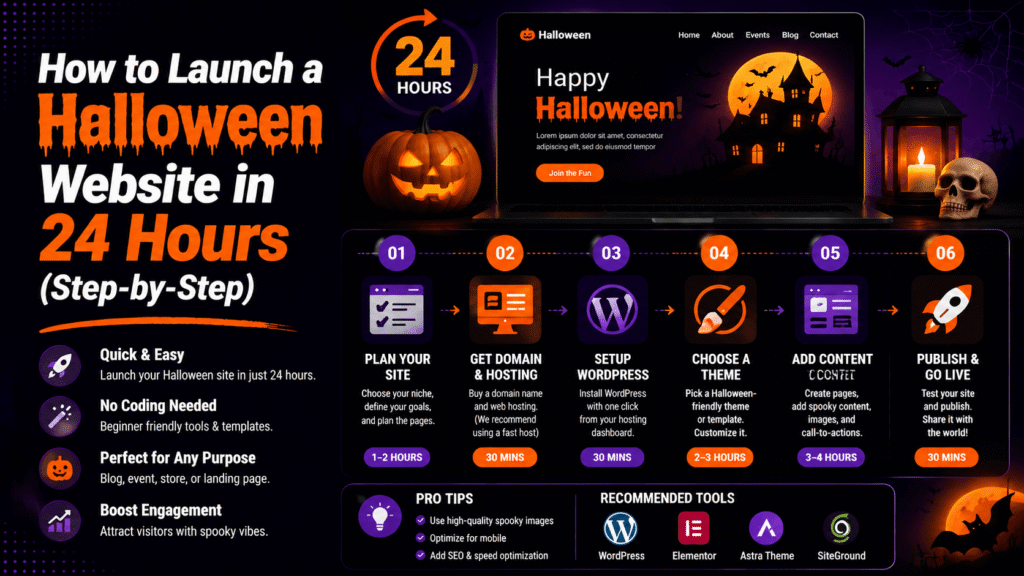
Halloween is big business. Millions of people search for costumes, decorations, and party ideas every year. This seasonal...

 Uncategorized
Travelers search online before picking a resort. A professional website helps them explore rooms, amenities, packages, location, and...

 Uncategorized
Travel planning starts online today. Most guests visit a hotel website before they book. A professional site shows...
Fill out the form below and we'll get back to you as soon as possible.
We usually respond within 1 business day.